



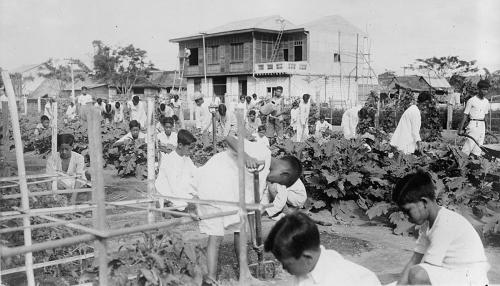
Children working in a war garden, 1918.
Photo courtesy of the Library of Congress
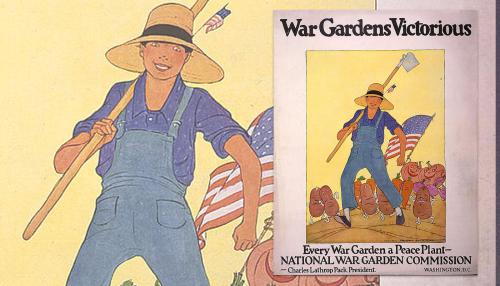
Northampton Community Garden in Massachusetts.
Photo courtesy of the Northampton Community Garden
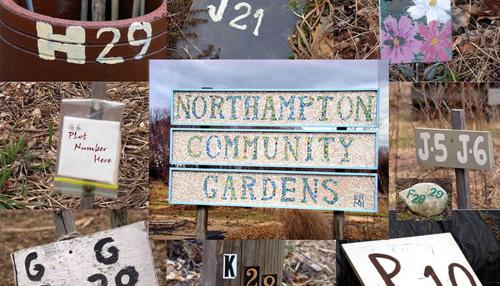
National War Commission poster, 1919.
Image courtesy of the Library of Congress
Introduction
By Sylvie Wise, Education Intern
Though it may seem like a recent trend, community garden initiatives have been documented in the United States for over a century. They are unparalleled in their ability to foster neighborhood camaraderie and forge a joint identity among individuals. These gardens are reflective of the shared values and histories of the communities from which they grow.
Urban gardens have long been a driving force in the revitalization of struggling communities. Almost always born of a communal need that is not being met, they tend to emerge and flourish in times of instability. In the 1910s, “war gardens” were a direct response to a nationwide need: food rationing in the midst of World War I. More recently, community gardens have sprung up all over Detroit in the last decade as a solution to citywide abandonment and economic hardships. Communities of any size can find renewal and stability in gardening.
Sylvie Wise is a anthropology student at Smith College with a focus on landscape studies. She interned at the Center for Folklife and Cultural Heritage in fall 2015.

An interview with Cynthia Brown, Smithsonian Gardens Horticulture Specialist