
- Heritage & Handicrafts: OAXACA
Oaxaca, the southern Mexican state known as a global arts and culture hub, boasts a staggering array of Indigenous-led, artisan craft-based creative industries. It is also considered one of the most biodiverse places on the planet, where artisans play an important role in both stewarding the environment and utilizing natural materials in their work. Oaxaca is home to important archaeological sites, whose folklore, history, and iconography contribute to craft practices and drives additional tourism interests.
Heritage & Handicrafts: OAXACA was a community-based project that aims to deepen connections between culture bearers and with local and international markets. Sponsored by the Cultural Heritage Center in the Bureau of Educational and Cultural Affairs, U.S. Department of State, the two-year pilot project launched in September 2022 with the aim of increasing visibility and revenue for artisan enterprises while decreasing trafficking of objects from historic and other culturally significant sites.
The project was designed in partnership with artisans, cultural leaders, and educators. Using a cultural ecosystem model, our Center and a team from the Benito Juarez Autonomous University of Oaxaca – School of Fine Arts and the CIIDIR Oaxaca unit of the National Polytechnic Institute identified needs, relationships, and activities required to support community cultural sustainability goals. The result was a suite of research, documentation, workshops, exchanges, and presentations, all aiming to amplify artisan enterprises, enhance the visibility of the sector, and strengthen pathways for intergenerational knowledge and skills transfer.
Community Focus
The project focused on programs in the town of Zaachila and surrounding communities in the Oaxacan Central Valleys. Zaachila is known for significant Zapotec and Mixtec archeological sites and the Danza de la Pluma (Feather Dance), an important tradition connecting the community to its tangible heritage and which uses various artisan craft practices.
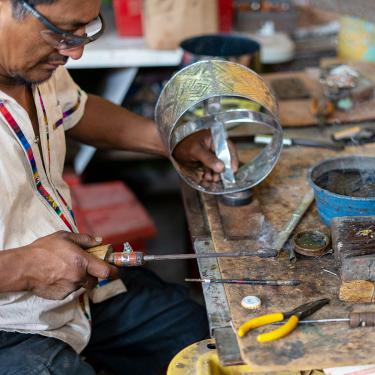
Artisan Francisco Cisneros welds pieces together for the base of a Feather Dance headdress.
Photo by Luis Martinez
Partners


Key Activities
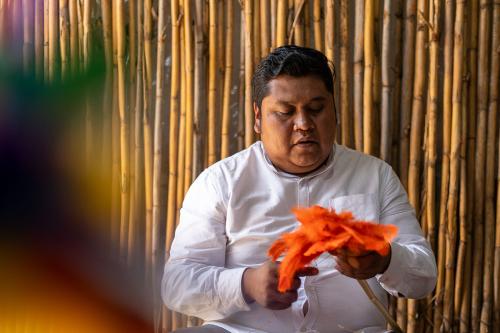
Roberto Miguel Silva gathers freshly dyed feathers to begin a new piece in his workshop.
Photo by Luis Martinez
Research and Documentation
The UABJO – School of Fine Arts conducted community-based research through artisan interviews and digital documentation of traditional crafts and processes to better understand the relationship between cultural heritage sites and their intangible cultural heritage. The collected documentation is available to the artisans during and after the program.
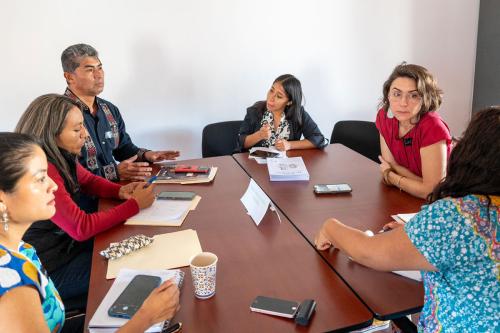
Advisor Lesli Robertson meets with artisans during the January workshop to discuss product design ideas.
Photo by Luis Martinez
Artisan Workshops and Exchanges
From December 2023 through March 2024, artisans participated in three workshops using the cultural ecosystem approach, a method which prioritizes community support. The workshops focused on topics including marketing, product design, and more, and it allowed artisans to build their networks and connections with fellow experts in the field.
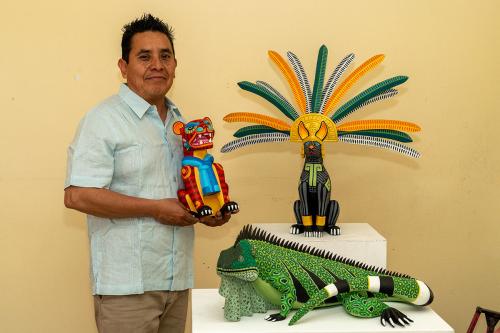
Luis Pablo displays some of his recently completed alebrijes (sculptures of fantastical creatures).
Photo by Luis Martinez
Continuing Education Course
The UABJO – School of Fine Arts hosted a forty-hour continuing education course built upon the program and individual study. With the completion of the optional course, artisans receive a certificate from the university. The school will continue to offer this opportunity after the project is finished.
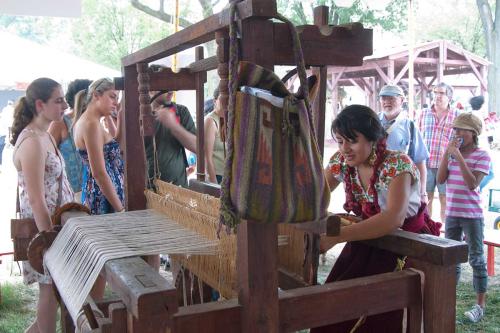
Weavers from Oaxaca demonstrated their craft at the 2010 Folklife Festival’s Mexico program.
Photo by Richard Strauss, Ralph Rinzler Folklife Archives
Smithsonian Folklife Festival
Representing their craft and Oaxaca, two artisans from the cohort will participate in the 2024 Smithsonian Folklife Festival, celebrating Indigenous communities and creative expression from across the Western Hemisphere. The Festival provides a unique opportunity for artisans and culture bearers to meet each other and build connections with practitioners from around the world.
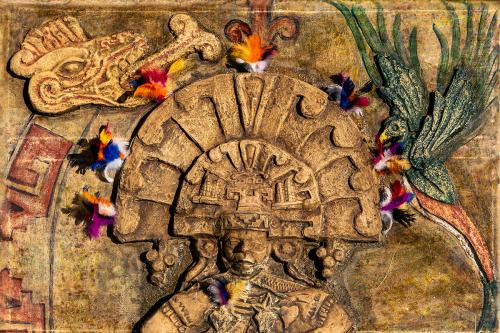
Zapotec Feather Dancer relief from Abel Aguilar Vasquez of Taller Garul.
Photo by Luis Martinez
Group Exhibition
The UABJO – School of Fine Arts will host a group exhibition incorporating work from each participant. Part of the exhibition will include a collaborative production of the Feather Dance regalia to provide a visual representation of the community’s cultural ecosystem. The show is tentatively scheduled for August 16–September 5, 2024.
Artisan Catalog
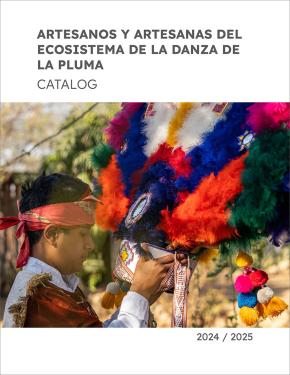
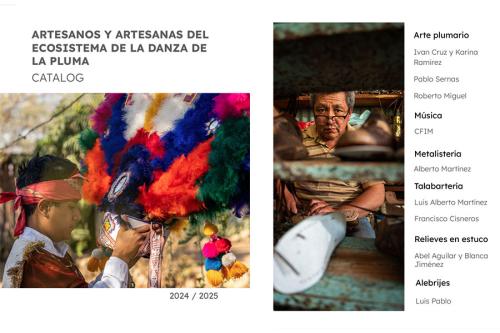
The project culminated in 2024 with the publication of Artesanos y Artesanas del Ecosistema de la Danza de la Pluma, a Spanish-language catalog that showcases the knowledge and skills of Oaxacan craftworkers involved in the traditional feather dance.
Articles
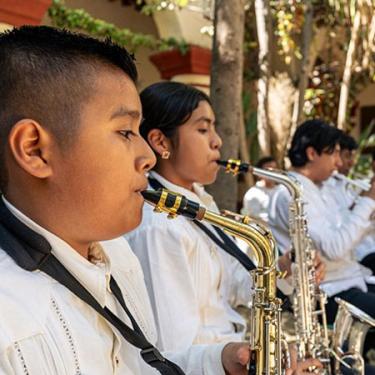
By Alberto A. Zapata Salazar, Cruz Merlín, Fernando Gumeta-Gómez, Mario Vázquez Morillas
Before the arrival of the Spanish, dance and music were fundamental elements in the spiritual life of Mesoamerican peoples.
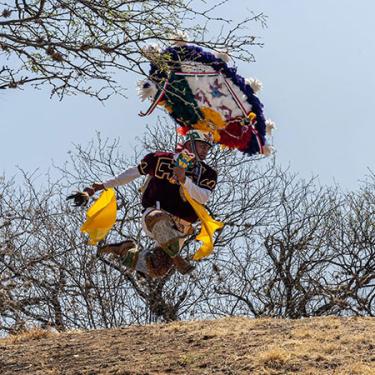
By Alejandro E. Hernández, Fernando Gumeta-Gómez, Gustavo Hinojosa-Arango, Marco Carballido
The dance tradition has survived five centuries of cultural changes and fused Mexico’s pre-Hispanic past with its present.
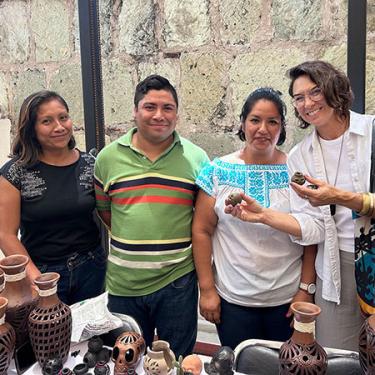
This community-based artisan project is designed to enhance local market access and global awareness of the Mexican region’s craft sector. (Leer en español.)
Staff
Support the Folklife Festival, Smithsonian Folkways Recordings, Cultural Vitality Program, educational outreach, and more.