



Support the Folklife Festival, Smithsonian Folkways Recordings, Cultural Vitality Program, educational outreach, and more.
more
After working in the commercial realm, the Festival was a humbling reminder that arts and cultures are organic, with a life of their own.
My internship at Smithsonian Folkways convinced me that music was a powerful tool for understanding the people of the world.
It was eye-opening to hear the New Mexican wood carver find common ground with an Irish stone carver who worked on renovations at the White House.
Growing up in a Jewish household in New Jersey, I found the Christmas season a bit awkward.
The Irish began emigrating across the Atlantic in the eighteenth century, with numbers skyrocketing when Ireland’s Great Potato Famine struck.
Economic hardships, a shortage of affordable housing, religious persecution, the threat of disease, and even the effects of climate change may force people to move.
While developing the Perú: Pachamama program for the 2015 Smithsonian Folklife Festival, we circled around the question of “Peruvian-ness.”
In June and July 2014, more than a hundred culture bearers traveled from China to the National Mall of the United States in Washington, D.C., to participate in the 2014 Smithsonian Folklife Festival program.
In the September 2014 national Asian and Pacific Islander Americans in Historic Preservation Forum, preservationists, historians, planners, and advocates of Asian and Pacific Islander culture in America gathered to address issues of cultural heritage.
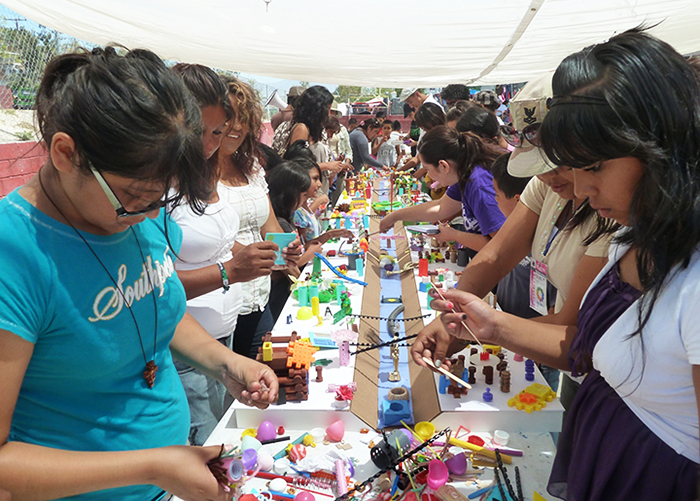
James Rojas is busy. In 2014, he worked in over ten cities across seven states. In early February 2015, he had just finished leading a tour of East Los Angeles’s vernacular landscape.
Folklife Magazine explores how culture shapes our lives. We publish stories about music, food, craft, language, celebrations, activism, and the individuals and communities who sustain these traditions.