






Support the Folklife Festival, Smithsonian Folkways Recordings, Cultural Vitality Program, educational outreach, and more.
more
In the United States, we have a long, unresolved history of violence and discrimination based on race, ethnicity, gender, orientation, ability, religion, and class.
Over the past few years, the young researchers of The Will to Adorn have been engaged in a project of community autobiography.
At the Center for Folklife and Cultural Heritage, we have been thinking a lot about assessing the long-term impact of our work. How does the Center support community agency? How do we learn through reciprocal engagement?
Submitting proposals for paper presentations at academic conferences can be very competitive, which is why I often try to improve my odds by selecting topics that have direct connections to the conference venue.
This year’s American Folklore Society (AFS) conference was held in Santa Fe, New Mexico, during the first week of November.
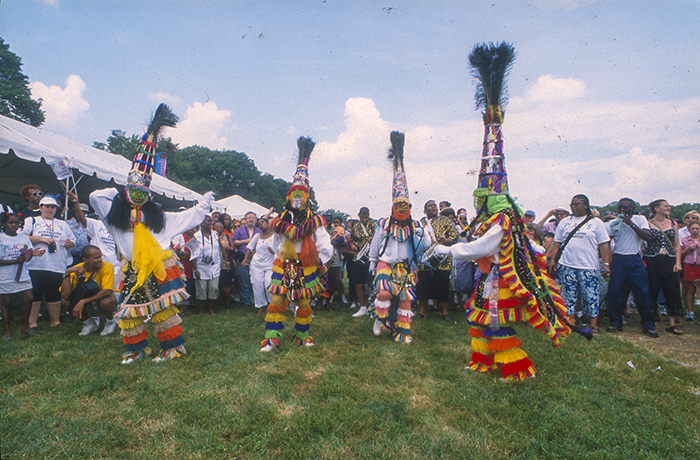
I spent much of my early childhood on the north shore of Bermuda. The island shaped me in many ways, and I still have many friends and family there. So it was a special privilege for me to curate a program about the land that I considered my first home.
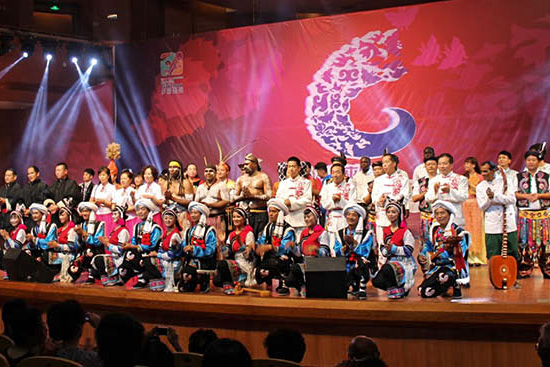
Following up on my spring 2014 visit, this summer I was airborne to the 2014 Guiyang Summer Festival of Indigenous Music in Guizhou Province, China. The event was the first time Guizhou cultural officials featured artists from beyond their home country.
Five on the Black Hand Side is a project exploring gestural languages that were born in African American communities during the 1960s and 1970s, including the “the dap” and the black power handshake.
My experience in Peru is very limited, but I did catch a glimpse of the Andean country’s uncompromising verticality.
Folklife Magazine explores how culture shapes our lives. We publish stories about music, food, craft, language, celebrations, activism, and the individuals and communities who sustain these traditions.