


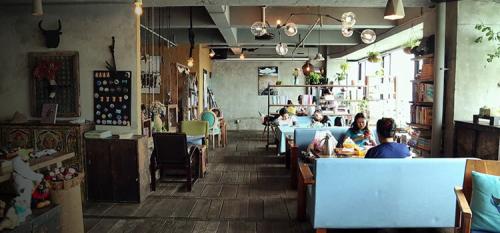



In the City
In the past twenty years, previously borderless valleys and mountains on the Tibetan Plateau have been carved up into small plots of private land, which have made herding and subsistence farming increasingly difficult. As a result, many rural Tibetans are moving to cities both large (like Beijing and Chengdu) and small (like Yushu) in search of work. In fact, the rate of urbanization in China is so high that the exodus has been recognized by the World Bank as one of the largest rural-to-urban migrations in human history.
This section of the exhibition highlights some of the ways in which nomadic Tibetans are becoming city dwellers—seeking to maintain and sustain their traditions in a globalized cash economy. These Tibetans continue to “make,” whether it be in a folk arts center, restaurant, café, or music club.
-
 Folk Arts & Artisans
Tibetan folk arts often profoundly influence the material and spiritual lives of many Tibetans in both rural and urban areas.
More -
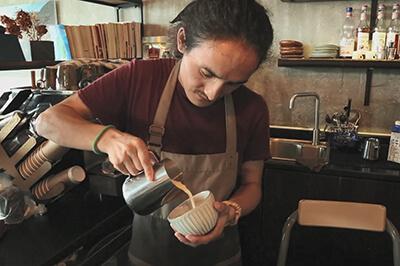 Restaurants & Cafés
This video highlights two different businesses owned by Tibetans who have moved to Chengdu: Charu Workspace and Aje Drogmo Tibetan Café.
More -
 Music Clubs
This video highlights two different music clubs owned by Tibetans who have moved to Chengdu: Dromala Musicspace and Makye Ame.
More
Support the Folklife Festival, Smithsonian Folkways Recordings, Cultural Vitality Program, educational outreach, and more.