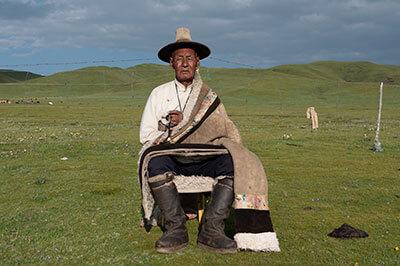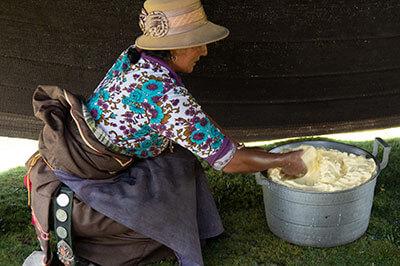

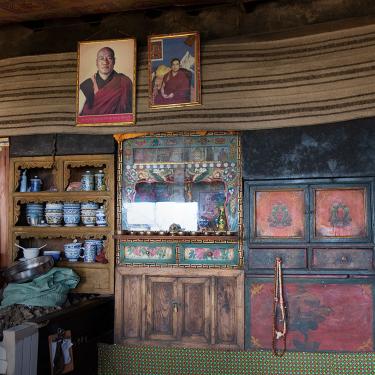


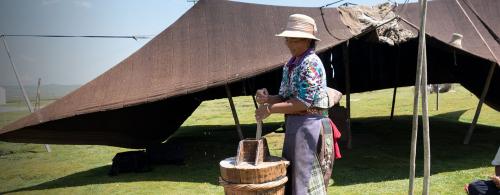

The tents where Tibetan nomads live are extremely significant places for Making on the Tibetan Plateau. This section of the exhibition highlights the traditions for making tents from yak hair; making clothing from animal skins and fabrics; food from plants and animals; games to pass the time inside the tent; and the tent’s interior spaces according to gender roles and the division of labor.
These vital aspects of daily life reflect not only the appreciation and respect that Tibetan nomads show for their land, their animals, and their culture, but also the significance of family ties, community relations, and cultural continuity on the Tibetan Plateau.
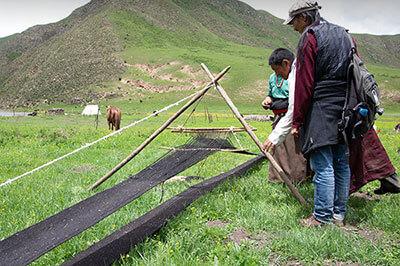
Tent Making and Interior Arrangements
Tent making is an essential aspect of Tibetan nomadic life. It provides not only a dwelling place for the family and relatives, but also functions as a social and cultural lubricant in the community.
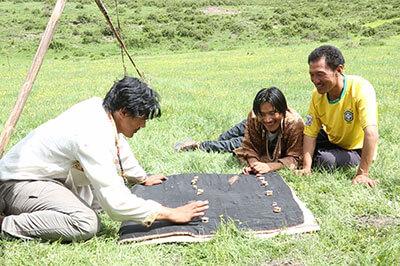
The nomadic life cycle—not unlike other forms of subsistence living—is primarily seasonal. The winter and spring seasons are cold, long, and the least productive period.
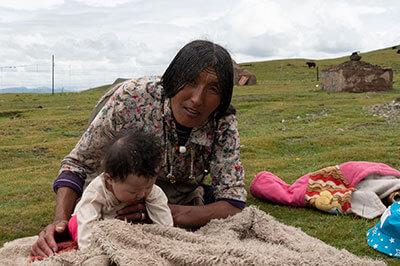
Gender Roles and Division of Labor
The interior arrangement of the tent reflects and reinforces social and cultural gender roles and orders. First and foremost, the interior tent is divided into three fundamental spheres.