
Magazine Feed

Recording studios run the gamut from spaces designed by specialists to the vernacular and homebrew.

My first bite of smörgåsbord every year is bruna bonor, rice pudding, and lingonberry sauce. It still tastes the same.
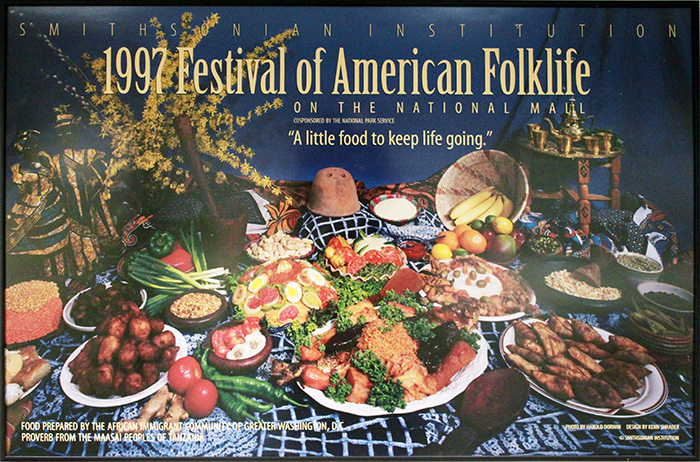
Here at the Smithsonian Center for Folklife and Cultural Heritage, we have a meta-foodways tradition. Whenever a staff member travels to an interesting place, it is customary to bring back a traditional food item to share with the office.

For the majority of the year, I am half Filipina. But during Christmas, I try to embrace this identity fully through a few small rituals.

“Christmas in July” was the fevered brainchild of curator Betty Belanus, but the Welsh cooks—including coordinators Angela Gray and Hazel Thomas, as well as chefs Anthony Evans, Geraldine Trotman, Gareth Johns, and Ana Rees—took on

Wigilia is an event filled with folk foodways, which typically require a large Christmas wafer passed around the table to begin the meal and exactly twelve courses.

Through our food, we carry on the Hakka spirit wherever we go.

The white, grainy porridge risengrød is the only traditional Danish Christmas dish from the common people that has survived to the modern-day dining tables in Denmark.

For many foreigners, traditional Estonian Christmas food can be a bit daunting—probably because most people can’t even hear “boiled meat jelly” (sült) or “blood sausages” (verivorst) without flinching.

In the United States, we have a long, unresolved history of violence and discrimination based on race, ethnicity, gender, orientation, ability, religion, and class.
Folklife Magazine explores how culture shapes our lives. We publish stories about music, food, craft, language, celebrations, activism, and the individuals and communities who sustain these traditions.